
Introducing our interim Executive Director: Max S. Graves Jr
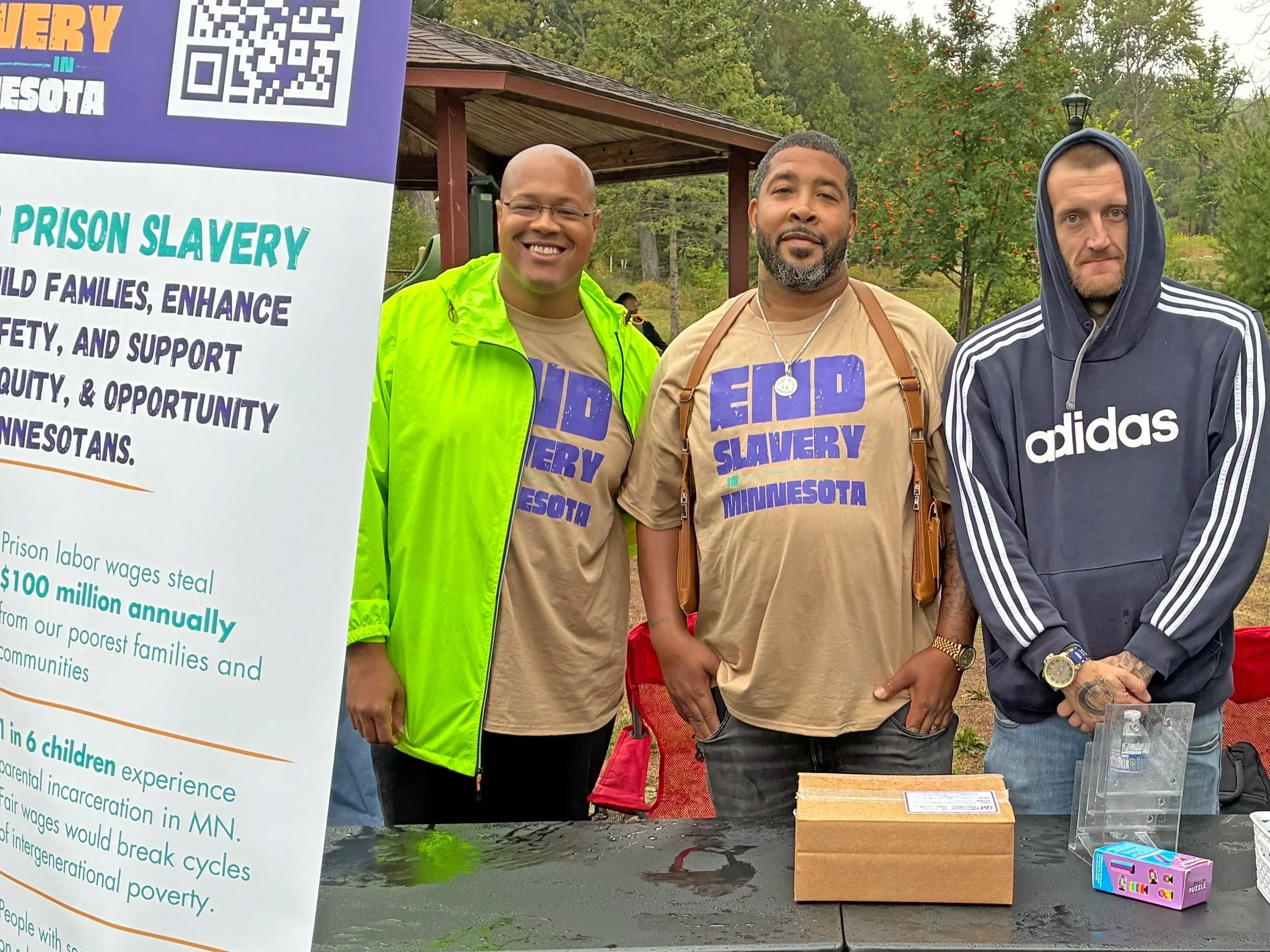
(from left) Carlos, Max and Josh at an event in Duluth
We know that the solutions to transforming the prison system can only come from those most impacted by its injustice.
So we couldn’t be more excited to share that Max Graves—who you know as an organizer with End Slavery in Minnesota—has been elevated to interim Executive Director of Get Free Minnesota (formerly Minnesota Incarcerated Workers Organizing Committee or IWOC).
We sat down with the new interim ED two weeks into his new tenure to learn a little more about his background and his vision. Watch the video on YouTube or read the Q&A below!
Where are you from? Where did you grow up?
I am from St. Paul, Minnesota. A Rondo-born baby. We stayed in a tight-knit community with Tiger Jacks, got my haircut at Art’s Barbershop. These are old classics, you know, within Rondo. So, I was a Rondo baby, born and raised, never left out. First time I went to Minneapolis, I was literally, like, 13 years old.
How did you get involved with organizing?
When I came home from prison, there were so many opportunities for me to input myself, and I figured out to organize was a way that you could actually reach people. There were so many things happening in the Twin Cities during the time when I was freed from the carceral system. And I went through so many things, including being abused by the police. I actually sued the Minneapolis Police Department for $100,000 and not even two, three years later, the same police officers that I sued had something to do with Jamar Clark's death. I sued the Minneapolis Police Department because they abused me in front of a thousand people in downtown Minneapolis, kicked my teeth out, tased me, choke me out, the whole nine yards.
But with Get Free and End Slavery, I started off as an End Slavery organizer, and just the whole backstory of what the exception clause brought to our social fabric was enough to entice me to want to learn more, because it seemed like a real problem. With my own personal history, I wanted to get involved with an effort that sheds light on something that could potentially stop the avalanche effect of where we're at right now.
What about your personal experience drives you in this work?
I've never had a problem with authority. But when you see the authority being forced upon you, like, we have to wake up, we have to sleep, we have to eat, we have to move in a certain way — just the way the whole prison system was, it affected the way I was thinking.
You know, being in prison is like you're dead. When I was locked up, I didn't have not a visit, you know, because I was locked up out of state. And you're in a vulnerable situation. when you can't tell nobody. I think that is the biggest thing: when you're in a facility that doesn't have any resources or proper support for individuals that are performing tasks. So if I'm working, and there are no labor laws, or if I'm living in a facility, and this facility is dirty, or I get hurt, and I try to get medical care, everything just falls on death ears. So you just want to take care of yourself and hold yourself as much as possible, you know? And because you spend so much time taking care of yourself and worrying about yourself behind bars, you really don't trust people after a certain point, you know. It's like, “Are you really for me?”
What’s your vision for Get Free Minnesota?
So look, a lot of people coming out, we're essentially financially disabled. There are no opportunities. Society kind of writes you off. My vision is that we support formerly incarcerated people’s financial goals, and quests to be independent. To really find themselves, you know? Right now I'm an interim director; nobody would have ever told me that I would be here. I probably would never even believed it myself because there are no programs that nurture formally incarcerated people to actually tap back into their potential—and make sure that we remove some of the exploitation practices that go on behind the walls. We want to make sure that we're fighting for you while you're in prison and when you come home—that there are supports. Because we're all family. Just because you get locked up don't mean you're not my relative anymore,
What’s your vision for the End Slavery campaign?
Slavery, like I said, that's one of those things that I've grown to learn the impact of it. Once we get done [passing the state legislation to end] slavery, it's not over. I feel like that's the beginning. Because slavery has been ended in eight states so far, we've already opened up a new coalition called PEARC: Post Exception Advocacy Realignment Coalition, where we challenge and go after the secondary legal system that was built around the exception. Already, we have a lot of formally incarcerated folks that are getting involved with that, some very brilliant college law students that want to get involved with that. Once we remove slavery, we still have to go into other policies and make changes in certain areas of our society, so we plan on making real change.
What do you want people to know about you as a leader?
That I’m glad that people trust me to be the voice of individuals that aren't giving a fair shake. That I might be kind of quiet and introverted in a way, but I'm thinking of a way to come with a heavy blow. And I'm here for the long haul. I'm a fighter, you know, and I'm going to give my all for it.