
End Slavery in Minnesota Coalition Kicks Off 2026 Legislative Campaign with New Leadership
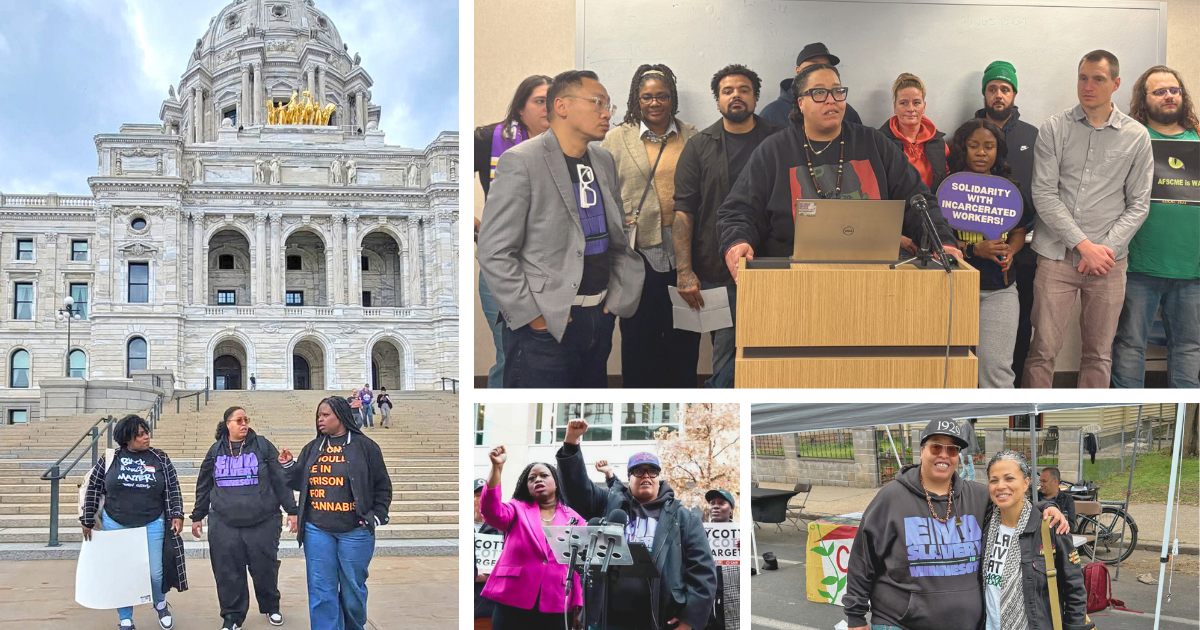
With new leadership from a prominent organizer and local elected official, the growing movement to abolish slavery in Minnesota is entering 2026 with a powerful vision and renewed energy. In June 2025, Chauntyll Allen joined the statewide campaign to remove slave labor from the state’s constitution and its prisons — and in December she stepped up as the Executive Director of the End Slavery in Minnesota Coalition.
Born and raised in Saint Paul’s historic Rondo neighborhood, Allen is a longtime front-line community organizer, educator and youth activist. She leads Black Lives Matter Twin Cities, founded Love First Community Engagement, and is serving her second term on the Saint Paul School Board. From the classroom to the capitol, from the streets to community centers, Allen has cultivated deep trust in and broad connections to communities who have been most impacted by incarceration — and developed strategic initiatives and campaigns to advance change.
“For decades, I’ve been organizing for Black liberation, from working directly with young people to advocating for systems change,” Allen said. “But we can’t achieve justice and prosperity for our communities unless we address the root cause of the problem: While chattel slavery was abolished with the 13th amendment, the systematic exploitation of Black people and our labor has continued. Right here in Minnesota, people in prison work for pennies because our constitution still allows forced labor as punishment for a crime.”
“We can’t achieve justice and prosperity for our communities unless we address the root cause of the problem: While chattel slavery was abolished with the 13th amendment, the systematic exploitation of Black people and our labor has continued.”
“But modern-day slavery isn’t a prison issue; it’s a Minnesota issue,” she added. “Every single person across the state is impacted by this injustice. Legal slavery robs workers of $100 million every year. It makes it impossible for parents to support their children and families while they’re on the inside, and increases recidivism when our neighbors come home because they’ve been working for years — sometimes for decades — without any ability to save for their future. And the daily dehumanization undermines the supposed goal of rehabilitation by giving our fellow Minnesotans menial tasks, like folding balloons for corporate profit, rather than career development for long-term financial sustainability.”
Because of the advocacy of justice-impacted communities, policies have already been crafted and introduced to end this ongoing exploitation. In 2023, Senator Champion and Representative Pinto brought forward a bill that would close the constitutional loophole that allows slavery. In addition, Representative Frazier and Senator Oumou-Verbeten are advancing the Bill to End Slavery, which would ban slavery in practice, not just in name. By passing legislation to reclassify incarcerated people as “workers,” we can begin to transform corrections from a revolving door of control and exploitation to a pathway to prosperity and healing for our communities.
“Minnesota was the first state to join the fight against slavery during the Civil War — but now we’ve fallen behind Alabama, Tennessee and others in removing slavery from our constitution,” Allen said. “Thanks to the leadership of currently and formerly incarcerated community members, along with legislative and philanthropic champions, we have the resources to advance this campaign in powerful ways. I’m excited to work alongside our growing coalition of individuals and organizations to make Minnesota a leader again — and create the first truly free state in our nation.”
Learn more about the coalition at mnendslavery.org